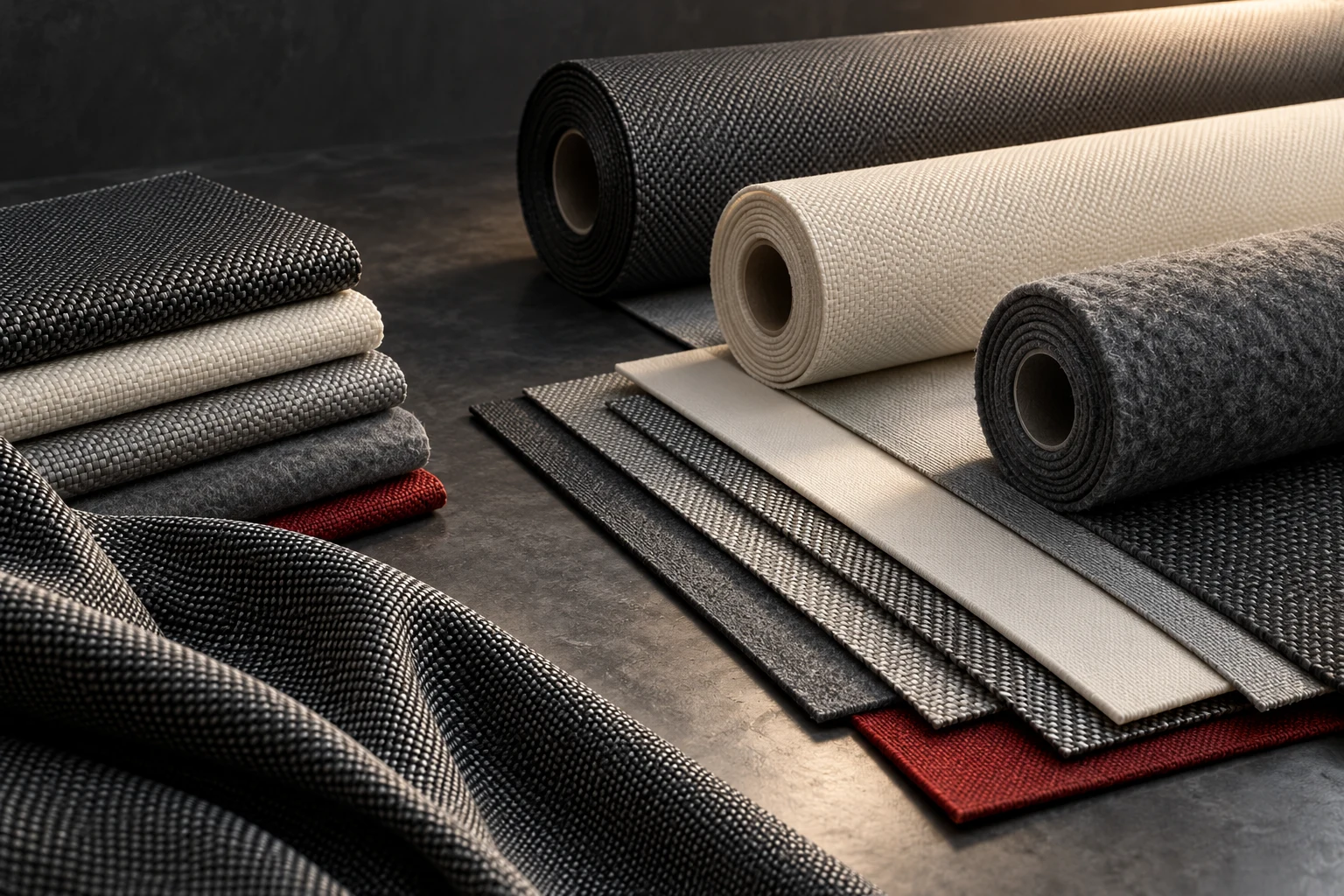
Technical Textiles
Develop the textile around the function of the finished product.
Reference width: 300 mm
Design visualization
Fiber selection, sheet formation, bonding, surface treatment, and conversion establish a nonwoven material structure. Intended use defines the proposed mass, thickness, handling, and manufacturing route.
Material and process choices follow the product brief.
Measurements and samples establish acceptance.
Lot records and inspection support the next manufacturing step.
Sampling connects the structure with converting equipment, product geometry, and acceptance criteria. Roll handling, traceability, and downstream production information are developed with the material.
Reference project sizes and design briefs. Final scope, measurements, interfaces, and deliverables are agreed with the client.
| Specification | Sample development | Production-width brief | Wide-format brief |
|---|---|---|---|
| Reference width | 300 mm | 1,600 mm | 2,200 mm |
| Basis | Development sample; composition and mass defined in the brief | Proposed working width; finished dimensions specified separately | Proposed working width; process route confirmed in specification |
Explore the design, the reference specification, and the configuration for each program.
Develop the textile around the function of the finished product.
Reference width: 300 mm
Share the application, the requirements, and the intended destination. We develop the configuration and quotation around your brief.